CAS
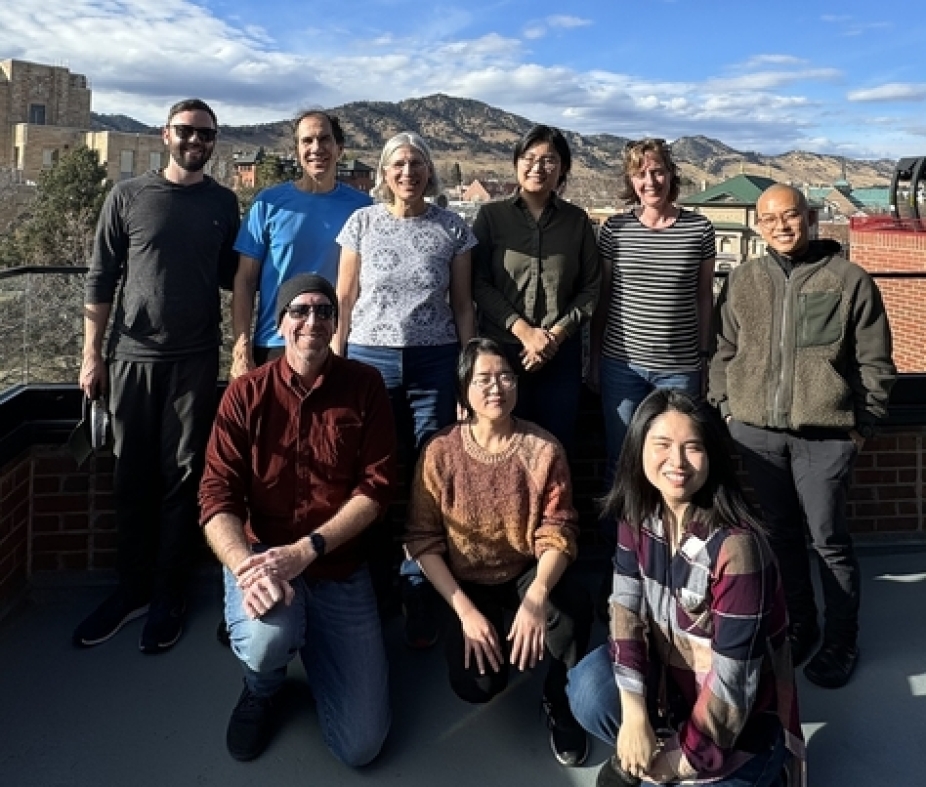
Who We Are
CAS provides a holistic view of the dynamics and energetics of the coupled Earth system, including modes of variability and anthropogenic change, in both observations and Earth System models. We develop community tools and resources (see Quick Links), mentor early-career scientists through the Advanced Study Program, and provide leadership to the CESM CVCWG.
Our Mission
Advance the understanding of the atmosphere and its interaction with the oceans, cryosphere, and land surface, through empirical studies, diagnostic analyses, and modeling.
Community Tools and Resources
The CDG provides concise and reliable information on the strengths and limitations of the key observational data sets, tools, and methods used to evaluate Earth System Models and to understand the observed states. Citable expert commentaries are authored by experienced data users and developers.
The Climate Variability Diagnostics Package for Large Ensembles and Climate Variability Diagnostics Package are analysis tools that compute the major modes of interannual-to-interdecadal Earth system variability in Earth System Models and observations to aid in model evaluation. Output files are displayed graphically and saved as netCDF files.
The CESM1 Large Ensemble Project (LENS1) is a 40-member "initial condition" ensemble of simulations covering the period 1920-2100 useful for studying past and future change in the presence of internal Earth system variability.
The CESM1 Single-Forcing Large Ensemble Project provides a set of simulations useful for addressing the individual roles of anthropogenic aerosols and greenhouse gases in historical and future change in LENS1.
The CESM2 Large Ensemble (LENS2) consists of 100 members at 1-degree spatial resolution covering the period 1850-2100 under CMIP6 historical and SSP370 future radiative forcing scenarios.
The CESM2 Single-Forcing Large Ensemble Project provides a set of simulations useful for addressing the individual roles of anthropogenic aerosols, greenhouse gases, and land use/land cover in historical and future change in LENS2.
The Multi-Model Large Ensemble Archive is a centralized data archive of initial-condition Large Ensembles conducted with CMIP5 and CMIP6 models containing gridded fields of key variables at both daily and monthly resolution, and is publicly accessible via the NCAR CDG or NCAR’s supercomputer.
The CESM Climate Variability and Change Working Group coordinates, conducts, and archives simulations with CESM that are of broad interest to the climate community for the study of internal variability and externally-forced change.